At the End: Finding God After the Chaos
The Hebrew word that gives this week’s Torah portion its name, Mikeitz, translates simply as ‘at the end’. It refers to the end of two years of Joseph’s imprisonment, marking the precise moment his fortune shifts. In the biblical narrative, the timing is impeccable. Pharaoh dreams, the cupbearer suddenly remembers Joseph, and in a whirlwind of providence, the prisoner is shaved, dressed, and elevated to Vizier of Egypt.
The text invites us to believe that everything happens for a reason. Looking back at his life later in Genesis, Joseph himself will tell his brothers that it was not they who sent him to Egypt, but God, in order to save lives. It is a theology of a Grand Plan, suggesting that the pit, the slavery, and the false accusations were all necessary distinct plot points in a divine script written for a greater good.
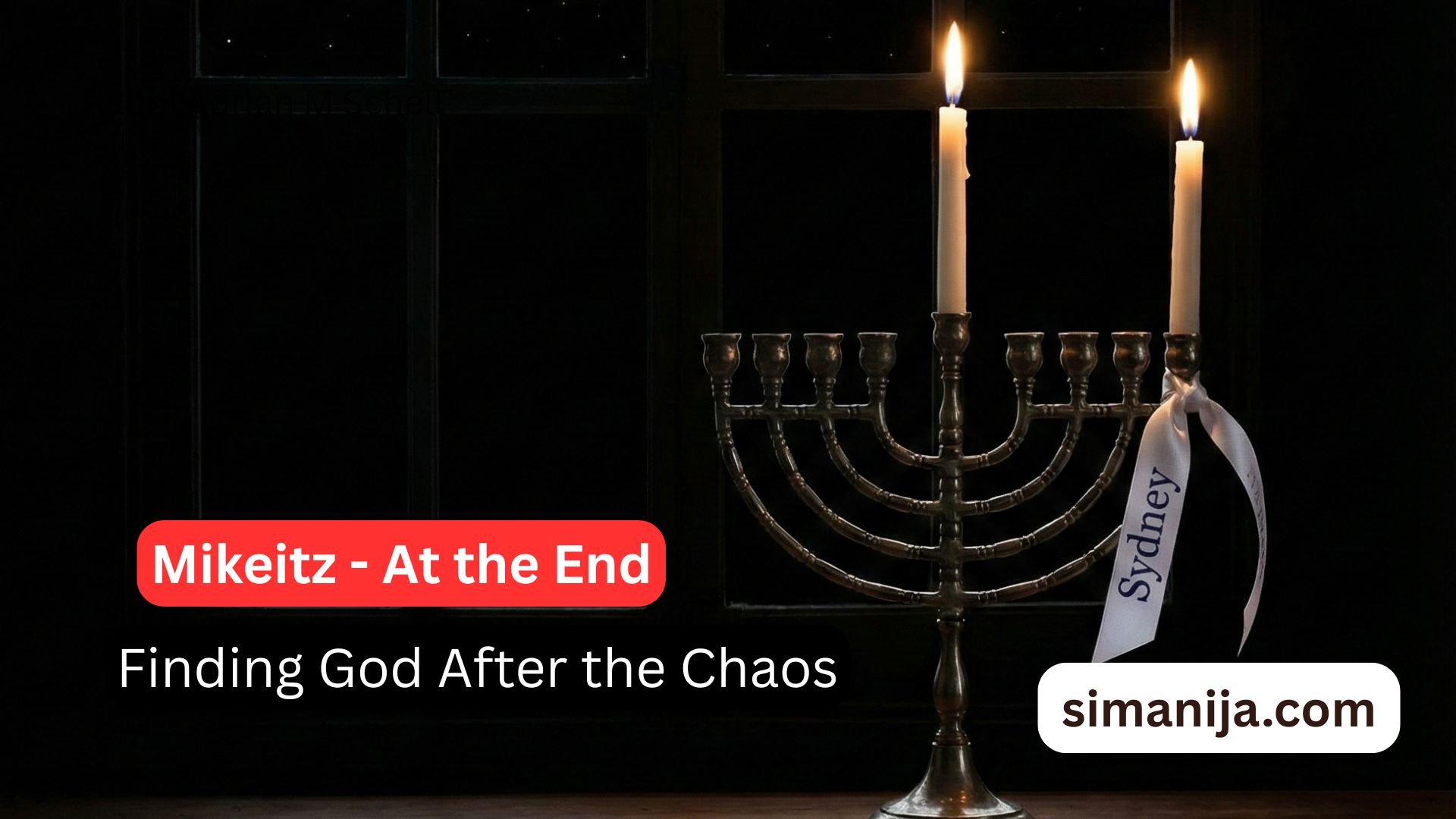
Yet, this theology is difficult to hold at the end of a week that began with the horrific news of the terror attack in Sydney. When we witness violence tearing through the fabric of ordinary life, the suggestion that such darkness is merely a prelude to a necessary light feels not just hollow, but cruel. We recoil from the idea of a Puppeteer God who moves people like chess pieces, sacrificing innocence for the sake of a future outcome. If this is the plan, we are right to return the ticket.
Progressive Judaism asks us to read the Joseph story differently. Perhaps God is not the author of the tragedy, but the source of the resilience that follows it. The divinity in Joseph’s story is not found in the fact that he was thrown into a pit; the pit was the result of human cruelty and indifference. God was found in the fact that Joseph did not let the pit become his grave.
When we look at Sydney, or any place where terror tries to shatter our sense of safety, we must refuse to sanctify the violence as ‘mysterious will’. Instead, we locate the sacred in the response. We see it in the first responders running towards danger. We see it in the strangers shielding one another. We see it in a community that refuses to let hatred have the final word.
Mikeitz reminds us that we are often standing ‘at the end’ of something we did not choose. We cannot control the chaos that others inflict upon the world. But we are not script-bound actors in a tragedy. We are partners in creation. The challenge of this Shabbat is to reject the paralysis of despair. We do not justify the suffering, but we do determine what comes next.
May this Shabbat bring comfort to all who are grieving, and may it strengthen our resolve to build a world where safety is not a miracle, but a birthright.
Shabbat Shalom,
Rabbi Adrian M. Schell