
Memory as a Sacred Obligation
A Path Toward Healing
For eight hundred and forty-four days, a digital heartbeat pulsed in the centre of Tel Aviv. It was a countdown clock that did not count down to a celebration, but rather counted up, marking every second, every minute, and every hour that our people were held in the dark. This week, that clock finally stopped.
The silence it leaves behind is not the joyous quiet of a struggle won, but the heavy, complicated stillness of a cycle closed. With the return of the remains of Ran Gvili, the final hostage of that terrible October day in 2023 has been accounted for. He was brought home to be buried in the earth of our homeland.
For his family, and for the House of Israel, the period of agonising uncertainty has ended, replaced by the profound, ancient weight of grief.
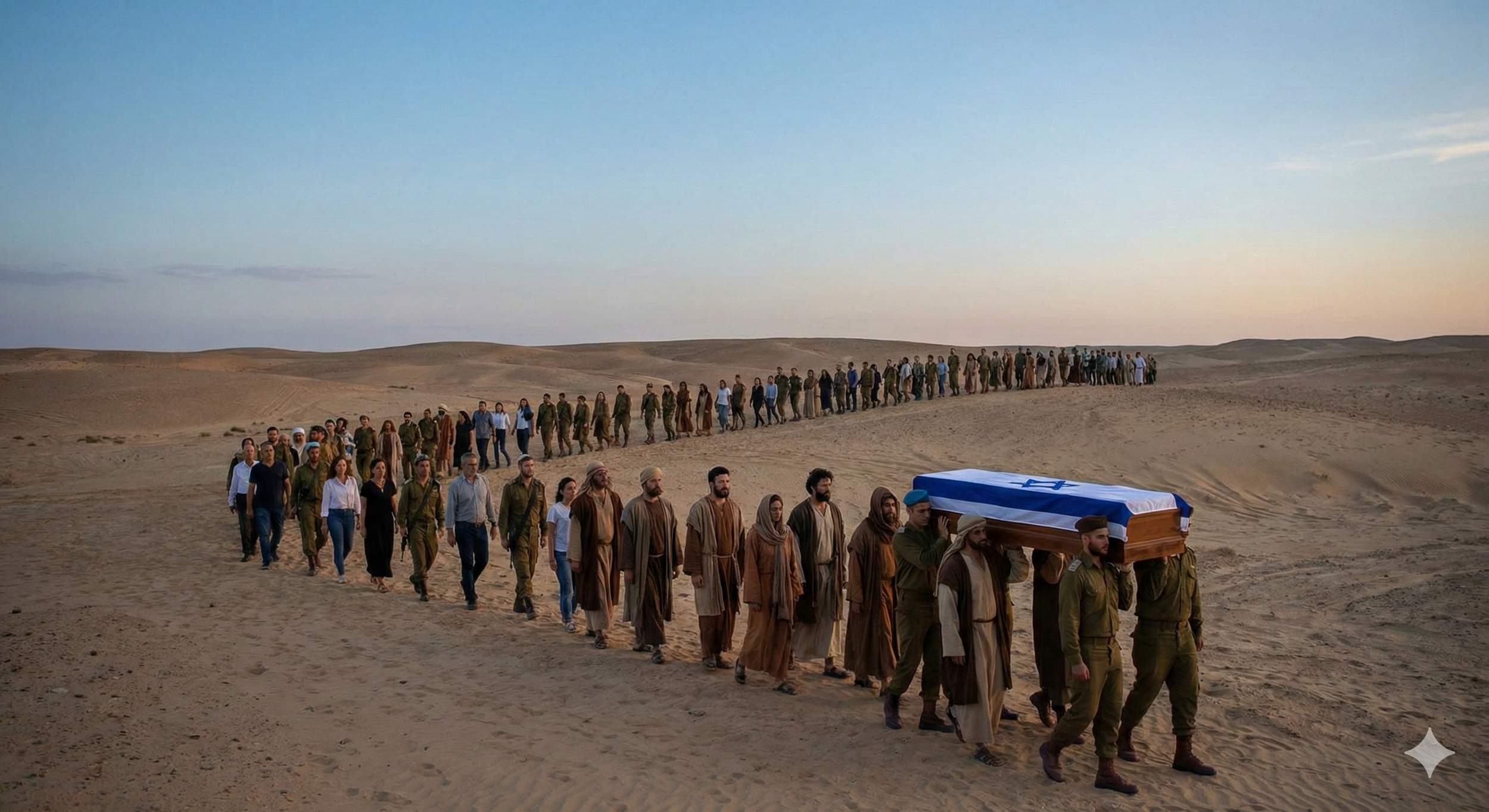
Tomorrow morning, we open the Torah to Parashat Beshallach. Most of us, when we think of this portion, see the towering walls of water at the Sea of Reeds. We hear the triumphant song of Moses and Miriam after the Israelites reach the other side of the sea. But tucked away in the opening verses of our portion is a line that feels remarkably quiet, but so deeply resonant today. The Torah tells us that "Moses took the bones of Joseph with him" (Exodus 13:19).
Imagine the scene. The Israelites are fleeing for their lives. They are carrying dough that has no time to rise, their children, and their few belongings. Yet, in the middle of this life-or-death escape, the leader of the people stops to ensure they are carrying a coffin. Joseph had made his brothers swear, centuries earlier, that when God finally led them out of Egypt, they would not leave him behind. He did not want to be a monument in Mitzra’im; he wanted to be a part of the journey toward home.
This act of carrying Joseph’s bones makes a statement that is deeply engraved in our souls: a Jewish future is only possible if we are willing to carry the weight of our past.
We do not leave our dead in the narrow places. Moses understood that the soul of the nation would be incomplete if a single promise remained unfulfilled. By carrying those remains through the wilderness, the Israelites were saying that every individual matters, that memory is a sacred obligation, and that home is not just a destination for the living, but a resting place for those we have lost.
In these recent days, we have seen a modern echo of this ancient devotion. We have read of the IDF units and forensic teams who combed through the ruins of northern Gaza, not for tactical advantage, but to find Ran Gvili.
They were, in a very real sense, the students of Moses. They operated under the conviction that the mitzvah of Pidyon Sh’vuyim, the redemption of captives, does not end when a heart stops beating.
Week after week, we recited a prayer in our prayerbook, no one of us ever thought we would ever need to read, the prayer for the return of hostages. While we prayed and hoped for a long time that all of the hostages would return alive, the return of Ran fulfils a core communal promise. We did not forget. We did not move on. By bringing him home for Kever Yisrael, a Jewish burial, we have refused to let his story be erased by the darkness of captivity.
We have ensured that his name remains etched into the soil and the memory of our people, rather than being lost in the wilderness of the unknown.
This sense of responsibility mirrors our feelings and words during this week’s Holocaust Memorial Day. We know, perhaps better than any other people, what it means to have no grave to visit. We know the haunting trauma of names without resting places. The stopping of the hostage clock on the heels of Holocaust remembrance serves as a stark reminder of our resilience. We are a people who insist on memory. We are a people who insist on the dignity of the individual, even when the world around us seems to have lost its moral compass.
As we transition into the beauty of Shabbat, we might ask ourselves what it means to "stop the clock." For the families of the hostages, the internal clock of trauma never truly stops, but the community can now shift its energy. We move from the frantic rhythm of advocacy and anxiety into a space of sustained support and collective mourning. We move from the "Song of the Sea" to the long, steady trek through the desert.
The wilderness ahead of us is still vast and uncertain. There are still many "bitter waters" to navigate, much like the Israelites at Marah later in our Parashah. But we take comfort in the fact that we are walking together.
Just as Moses did not walk alone with Joseph’s bones, we do not carry our collective grief in isolation. We carry it as a congregation and as a global family.
This Shabbat, let us hold space for the silence of that stopped clock. Let us offer a prayer of strength for the Gvili family and for all those whose lives have been forever altered by these past years. May we find the courage to carry our history with us, both the triumphs and the tragedies, as we seek a path toward healing.
May the memory of Ran Gvili, and all those who did not return to us as we hoped, be a blessing and a revolution in our hearts.
May we be inspired by the persistence of our people to never leave anyone behind, and may we work toward a day when no more clocks need to count the seconds of our sorrow.
Shabbat Shalom.
Notes and Citations
MRJ Siddur (Forms of Prayer). "A Prayer for the Release of Captives," Community Prayers and Passages, page 367.
Exodus 13:19. "And Moses took the bones of Joseph with him; for he had straitly sworn the children of Israel, saying: 'God will surely remember you; and ye shall carry up my bones away hence with you.'"
Mishnah, Pirke Avot 2:1. "Be as heedful of a light mitzvah as of a weighty one, for you do not know the reward for each." The dedication to Pidyon Sh'vuyim reflects the ultimate weight of the mitzvah of dignity.
Holocaust Memorial Day Trust. Reflecting on the theme of "Fragility of Freedom" and the importance of naming the lost. (January 2026).