The Courage of Inadequacy
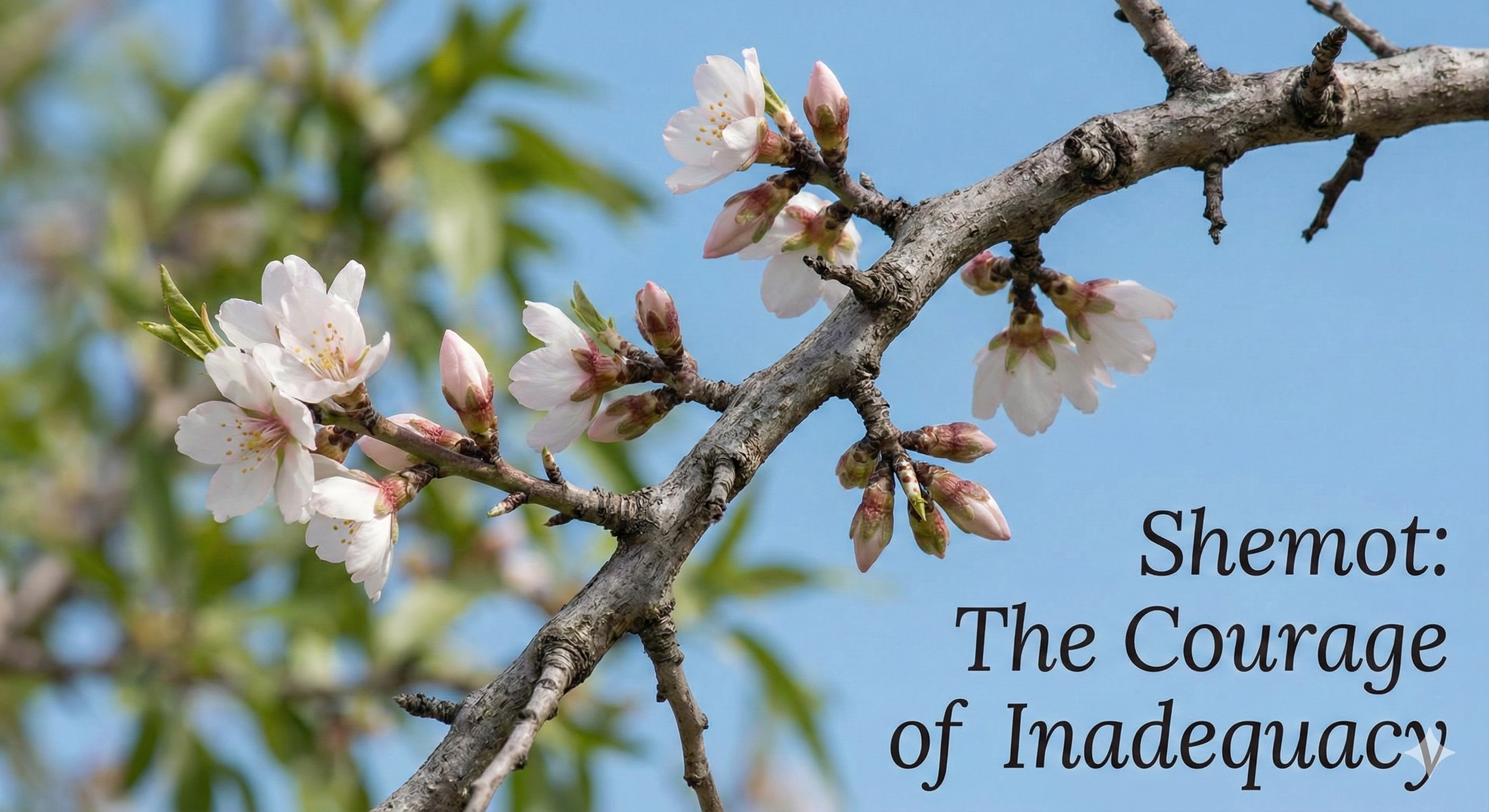
Just as you see the Shaked, so I am Shoked
We often imagine the great biblical leaders as individuals of unshakeable confidence. We tend to picture the cinematic version of Moses, standing fearless before Pharaoh, or the booming voice of a prophet thundering against corruption. Yet, when we look closely at the texts appointed for this Shabbat, we find something far more human, fragile, and reassuring.
In our Torah reading, Exodus 3, Moses stands before the burning bush. He does not immediately volunteer for the task of liberation. On the contrary, he resists. He asks, "Who am I that I should go to Pharaoh?" He is anxious about his standing, his ability to speak, and his worthiness. He looks at the task and feels entirely too small.
We find an almost identical hesitation in the Haftarah (Jeremiah 1: 1-12). Jeremiah’s career begins with a protest: "Ah, Lord God! I do not know how to speak, for I am only a youth." Both of these spiritual giants look in the mirror and see only their limitations.
The profound optimism in these stories is found in the Divine response. It is fascinating that God never contradicts their self-assessment. God does not argue with Moses by saying, "Actually, you are quite a dynamic speaker," nor does He tell Jeremiah, "You are more mature than you realise." God does not offer a pep talk about their skills.
Instead, God offers a relationship. To Moses, the answer is simply: "I will be with you." To Jeremiah, God shows a vision of an almond branch, שָׁקֵד shaked in Hebrew, which is the first tree to blossom after winter. It is a symbol that God is "watching" (שֹׁקֵד shoked) and present, ready to make life bloom where it seems impossible.
The message for us is clear. We often wait until we feel perfectly ready, qualified, or "enough" before we step forward to help our community or challenge the brokenness of our world. We wait for our impostor syndrome to vanish. Our texts remind us that the feeling of inadequacy might never go away, but it does not have to stop us.
We do not need to be perfect vessels to carry a holy message. We do not need to have all the answers. We only need the willingness to turn aside, notice the bush that burns but is not consumed, and say, "Hineni—Here I am."
Shabbat Shalom.
Rabbi Adrian
“Hebrew is built on three-letter roots (shoresh). In this case, the root is Shin-Kuf-Dalet (ש-ק-ד).
Shaked (שָׁקֵד): This is the noun for Almond (or almond tree).
Shoked (שֹׁקֵד): This is the verb for Watching, waking, being alert, or hastening.
When Jeremiah says, “I see a rod of an almond tree (makel shaked),” God replies, “You have seen well, for I am watching (shoked) over My word to perform it.”
God is essentially saying: “Just as you see the Shaked, so I am Shoked.””