
A Letter to Myself: Reflections on my father’s first Yahrzeit
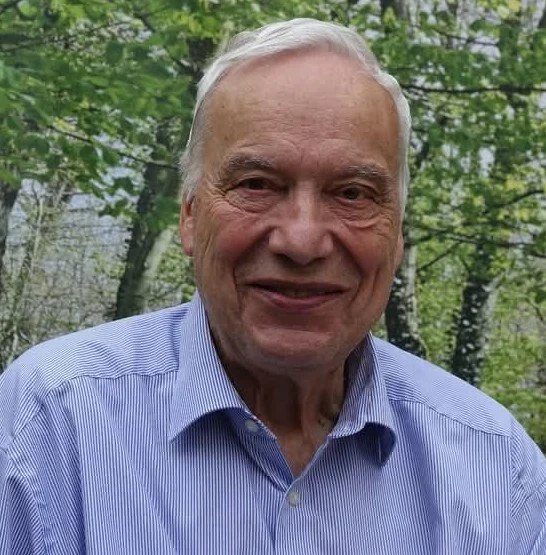
Michael Schell z’’l 1939-2025
Last month, I received a letter from the synagogue office.
It contained words I had written two or three years ago, but it was the first time I received this letter addressed to myself. The letter told me that a full cycle of the seasons has passed since my father died.
In our tradition, the first yahrzeit is a significant threshold. It marks the end of the formal period of mourning and the transition into a lifetime of memory. As I stand before you, I find myself looking back at a year that was unexpectedly crowded with the presence of death.
In the twelve months since my father’s passing, our community has accompanied around twenty individuals on their final journeys.
For a rabbi, the task of walking with the bereaved is a constant, but this year, the weight of it felt different. There was a strange, heavy resonance between my private study, where I sat with my own grief and the living rooms where I sat with yours. Yet, in a way that I am still trying to fully understand, this year of intense communal loss felt, if not easier, then more grounded than the years that came before.
There is a profound theological clue to this experience in the opening verses of our Parashat Va’era. As God prepares Moses for the monumental task of liberation, the text records a shift in the Divine perspective. God says, "I have also heard the moaning of the Israelites, whom the Egyptians are holding in bondage, and I have remembered My covenant" (Exodus 6:5).
Note the sequence of the verbs. In earlier chapters, we are told that God "knew" of the suffering. But here, the Torah emphasises that God "heard." There is a radical difference between knowing a fact and hearing a soul.
To know someone is suffering is an intellectual or observational state; to hear their groaning is to be pulled into their reality. In the Jewish tradition, hearing is the first step toward redemption. It is the theology of "Bearing Witness."
Before I lost my father, I "knew" what bereavement looked like. I had the liturgy, the psychological frameworks, and the professional experience to offer comfort. But this year, I started to "hear."
My own loss acted as a sort of spiritual tuning fork. When I sat with a family this year, I was no longer just a narrator of the tradition. I was a fellow traveller.
I found that the act of truly listening to your stories—how your husband laughed, how your mother struggled, how your friends left gaps in your lives—became the very mechanism through which I processed my own father’s death.
There is a beautiful reciprocity in the act of bearing witness. As a chaplain and rabbi, I have always taught that being heard is the first step in moving from the "slave-state" of being an object of tragedy to the "human-state" of being a subject with a story. This year, I realised that this applies to the listener just as much as the speaker.
In the noisy, frenetic world we inhabit, the act of truly listening is a godly act. We live in a culture that values "knowing" and "solving." We want to fix the grief, to offer the right cliché, to find the "scalable" solution to sadness. But Parashat Va’era suggests that God’s first act of redemption was not to “part the sea” or to send the plagues, but simply to listen without interruption.
The Hebrew word Sh’ma means more than just perceiving sound; it implies a deep, responsive attention. When God "heard" the Israelites, it meant their pain was no longer just a background noise of history; it became a command for action.
Perhaps this is why the last year felt more manageable for me despite the high number of deaths in our community.
When we are in the midst of our own mourning, we often feel isolated, as if we are the only ones wandering in the desert. But through the necessity of my role, I was forced to hear your groaning alongside my own. In doing so, the "I" of my grief became a "We." The burden did not get lighter in terms of its mass, but it became easier to carry because it was distributed across a community of shared experience.
This is the essence of Jewish life. We do not claim to have easy answers for why we suffer or why the world is often so cruel. Instead, we commit to the radical act of being present for one another. We build a sanctuary not of stones, but of ears and hearts.
As I reflect on my father’s life and the many lives we have celebrated in this sanctuary over the past year, I am struck by the power of the human voice to break through the silence of the void. We are a people of the word, yes, but we are primarily a people of the ear.
My challenge to us all as we move into this next year is to cultivate this divine quality of hearing. To bear witness to the person sitting next to you, not by offering advice or trying to "know" their situation, but by simply hearing their "na’akah," their groaning, and their joy.
I want to thank all of you for the listening you have done in the past year. For the support and the love. May we continue to support one another through the shadows, knowing that even in the darkest night, the act of listening is a light that never goes out.
And for my father, and for the souls we have mourned together this year: may their memories continue to speak to us, and may we always have the merit to truly hear them.
Zichrono Livracha