Hearing Requires Room for Every Story
The Theological and Interfaith Implications of the Church of England's Engagement with Kairos II - A Research for a Sermon.
A Research to understand the General Synod's Decision and how it has impacted Christian-Jewish conversations in the UK by Rabbi Adrian Schell.
Disclaimer: I conducted this research to prepare a sermon for my community, exploring why I and many Jewish leaders, organisations, and Christian friends were shocked by the Synod's motion to ‘hear’ Kairos II. I aimed to gather and verify facts, but this document was made in emotional distress and may lack some nuances and cautions needed in interfaith work. My goal is to explain why Kairos II and the Synod's decision to ‘hear’ it caused pain to the Jewish community.
Introduction to the July 2026 General Synod Decision
In July 2026, the Church of England General Synod convened in York and passed an amended motion concerning the ongoing Israeli-Palestinian conflict, marking a watershed moment in contemporary British religious politics. The motion, originally brought forward by the Diocese of Carlisle through the Ven Stewart Fyfe, Archdeacon of West Cumberland, called upon the Church to formally engage with a series of declarations authored by Palestinian Christian organisations.1 The most prominent and contentious of these documents is the 2025 text titled "A Moment of Truth: Faith in a Time of Genocide", widely known as Kairos Palestine II or simply Kairos II.3 After hours of impassioned debate, procedural delays, and significant external pressure from Jewish communal leadership, the Synod voted overwhelmingly to formally "hear" the Kairos II document.3 The voting margins were substantial across all three houses of the Synod, with 25 Bishops voting in favour (none against, five abstentions), alongside 115 clergy (20 against, 30 abstentions) and 113 laity (27 against, 35 abstentions) supporting the motion.5
The original text of the motion had asked the Synod to "receive" the document. Following severe pushback from Jewish communal organisations, who warned of the text's deeply problematic theological and political assertions, the wording was amended from "receive" to "hear".1 Proponents of this amendment, including the Archbishop of Canterbury, Dame Sarah Mullally, argued that hearing the heartfelt expressions of lived experiences does not equate to wholesale agreement with every political or theological claim contained within the text.2 This semantic shift was intended to serve as a delicate compromise, allowing the Church to demonstrate pastoral solidarity with Palestinian Christians in the Middle East without officially endorsing the document's more inflammatory rhetoric.7
However, an analysis of the Kairos II document reveals that it is not merely a pastoral plea for peace or a simple expression of regional suffering. It is a highly charged political and theological manifesto that explicitly labels the State of Israel as a "colonial enterprise built on racism", accuses the state of enacting a deliberate genocide, and demands the dismantling of what it terms a system of "arrogant Jewish supremacy".4 Furthermore, the document asserts that the Hamas-led massacres of October 7, 2023, were born out of decades of oppression, thereby contextualising and arguably attempting to mitigate the moral severity of those atrocities.4
The decision of the Church of England to formalise its engagement with this specific text has triggered a profound crisis in Jewish-Christian relations across the United Kingdom.10 The Chief Rabbi, Sir Ephraim Mirvis, alongside the Board of Deputies of British Jews and the Movement for Progressive Judaism, strongly condemned the Synod's decision, describing it as a tragedy for interfaith relations.9 The Council of Christians and Jews (CCJ) subsequently reported that the vote had raised deep concern and damaged decades of trust across the Jewish community.13
By examining the theological weight of "hearing", the historical legacy of the Church of England regarding colonialism, the demographic realities of the Middle East, and the breakdown of dialogical theology, this exhaustive report will analyse the profound structural and theological implications of the Synod's decision. It will demonstrate how the Church's attempt to navigate a geopolitical crisis has inadvertently validated supersessionist theology, undermined Jewish indigeneity, and severely compromised the future of grassroots interfaith relations.
The General Synod Debate and the Anatomy of Kairos II
To understand the magnitude of the interfaith rupture, it is necessary to first examine the mechanics of the Synod debate and the specific contents of the Kairos II document that the Church has now officially resolved to "hear".
The Mechanics of the Synod Vote
The debate surrounding the motion was highly fraught, carrying over from Sunday evening into Monday morning due to procedural delays and intense discussions on the floor.3 The motion called on the Church to affirm the dignity of all peoples in the region, reject antisemitism and anti-Muslim hostility, and encourage deeper theological reflection across the Church.5 Crucially, it included a mandate to review ethical investment policies in light of the July 2024 International Court of Justice Advisory Opinion on the illegality of Israel's occupation.15
The most heavily debated clause was the instruction to engage with the Kairos Palestine declarations. The Bishop of Lichfield, Dr Michael Ipgrave—a former chair of the Council of Christians and Jews—supported the amendment changing the word "receive" to "hear".1 He cautioned that this change must be more than cosmetic, stating that while the Church recognises the document as springing from the trauma of the Palestinian people, it does not recognise all its language as acceptable for the Church's own use.2
Archbishop Sarah Mullally, who had recently returned from a pilgrimage across the Diocese of Jerusalem and the West Bank, delivered a speech acknowledging the palpable fear among both Palestinians and Israelis.17 She stated that the threat to Palestinian Christians is existential and called for active solidarity.18 While she acknowledged the concerns of the Chief Rabbi, the Board of Deputies, and the Co-Leads of the Movement for Progressive Judaism, she argued that the urgency of the situation demanded difficult conversations and the risk of engaging across divides.2 Ultimately, the Synod chose to override the explicit warnings of the Jewish community, opting to pass the amended motion by a vast majority.5
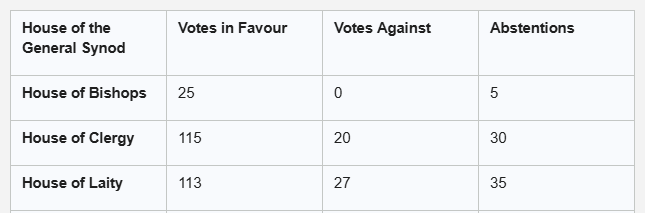
Data sourced from the July 2026 General Synod voting records.5
The Content and Ideology of Kairos II
The Kairos II document, issued in late 2025 by the Palestinian Christian Ecumenical Initiative, is a 14-page text intended to serve as a theological and political update to the original 2009 Kairos Palestine document.4 While it poses as a route to understanding, a textual analysis reveals a document heavily steeped in absolute political maximalism and aggressive theological displacement.
Key assertions within the Kairos II document include:
Accusations of Genocide and Apartheid: The document repeatedly characterises Israel's military actions as genocide and ethnic cleansing. It asserts that Israel operates a sophisticated regime of apartheid and arrogant Jewish supremacy.4
Delegitimisation of the State's Foundation: It describes the State of Israel, established in 1948, as a continuation of European colonial enterprises built on racism and ethnic superiority.4 It frames Zionism solely as a settler-colonial movement, stripping it of its status as the national liberation movement of the Jewish people.4
Contextualisation of Terrorism: In Section 1.6, the document addresses the October 7, 2023, massacres, claiming that invoking self-defense is invalid. It states that the Hamas attack was "born out of decades of injustice, oppression and displacement," thereby weaponising historical context to rationalise unprecedented violence against civilians.4
Rejection of the Two-State Solution: Section 4.2 explicitly rejects proposals for a "weakened, conditional state," dismissing the standard international framework for a two-state solution and instead demanding the dismantling of the current system built on Jewish supremacy.4
Endorsement of BDS: Section 2.5 explicitly values and endorses global movements of boycott, divestment, and sanctions (BDS) against Israel, viewing them as moral and creative resistance.4
The Board of Deputies briefing warned the Synod that these claims are not merely attacks on Israeli government policy, but constitute a libel against Jews everywhere, erasing Jewish faith, identity, and historical experience.10 The Chief Rabbi noted that the document uses extreme rhetoric to challenge the very concept of a Jewish state.3 By formally resolving to "hear" this document, the Church of England has structurally entangled itself with these maximalist positions.
The Theological Semantics of "Hearing": Bureaucracy vs. Covenant
The central defence articulated by the General Synod for engaging with Kairos II relies on the legalistic and bureaucratic distinction between "receiving" a document and merely "hearing" it.1 Synod members clarified that the engagement did not require the Church to endorse every sentence, framing the act of hearing as a passive, pastoral acknowledgement of trauma.7 However, in the realm of theology—particularly within the Abrahamic traditions—hearing is never a passive bureaucratic gesture.
The Shema Yisrael and the Act of Listening
To understand the profound injury this semantic defence causes to the Jewish community, one must examine the theological concept of hearing in Judaism. The central declaration of Jewish faith is encapsulated in the Shema Yisrael ("Hear, O Israel: the Lord our God, the Lord is One").22 The Hebrew root word sh'ma is a complex motif that defies simple English translation. As the late Chief Rabbi Lord Jonathan Sacks extensively documented, sh'ma encompasses a multitude of interconnected actions: to hear, to listen, to pay attention, to understand, to internalise, to respond, and to obey.23
Rabbi Sacks pointed out a structural phenomenon in biblical Hebrew: there is no distinct verb that means "to obey".25 Instead, the Torah uses sh'ma. In modern Hebrew, a distinct Aramaic loanword, letzayet, is used to convey blind obedience, such as following military orders.25 But biblical theology rejects blind obedience in favour of active listening. When the Torah commands Israel to "hear," it demands an active cognitive and spiritual engagement.25 Faith, in this framework, is a form of listening to the Divine word and to the message of history.27
Sacks elaborated that in Western, Hellenistic culture, understanding is primarily a visual metaphor (e.g., "I see what you mean," "insight," "perspective").26 In contrast, Jewish culture is fundamentally auditory. To hear is to bear witness.27 Sacks translated the opening of the Shema not as a passive reception of sound, but as an active imperative: "Listen. Concentrate. Give the word of God your most focused attention. Strive to understand. Engage all your faculties, intellectual and emotional".23
The Institutional Validation of "Hearing"
When this theological understanding of hearing is applied to the Church of England's actions, the Synod's bureaucratic defence collapses. A major religious institution cannot formally decree that it will "hear" a deeply theological document while simultaneously claiming that the act of hearing is devoid of spiritual validation or endorsement. In a religious context, to hear a testimony is to grant it moral and spiritual authority; it is the prerequisite to integration and action.25
By formally voting to hear Kairos II, the Church of England is not acting as an archivist filing a controversial report; it is acting as a moral arbiter. It has elevated a document that systematically delegitimises the Jewish state to the status of an acknowledged truth.10 The semantic retreat from "receive" to "hear" fails to mitigate the theological damage because, for the Jewish community, hearing implies internalisation and a corresponding ethical response.24 If the Church is truly "hearing" a document that labels Jewish self-determination as a genocidal, racist sin, the inevitable theological consequence is the legitimisation of that worldview within Anglicanism.
The Resurgence of Supersessionism and the Erasure of Covenant
The theological injury inflicted by the Synod's vote is compounded by the specific theological mechanisms employed within the Kairos II text. The document leverages the biblical motif of a God who hears the cries of the oppressed, drawing a direct parallel between the suffering of the Israelites in the biblical Exodus and the current suffering of the Palestinian people.4
While the theological impulse to align the Divine with the oppressed is a core tenet of liberation theology, Kairos II executes this alignment by transferring the covenantal relationship entirely away from the Jewish people.29
The Legacy of Replacement Theology
This theological manoeuvre reflects a deeply ingrained tradition of supersessionism, or replacement theology. Historically, supersessionism is the Christian doctrine asserting that the Church has succeeded the Israelites as the definitive people of God, thereby rendering the Jewish covenant obsolete and void.31 For nearly two millennia, this theology provided the ideological foundation for systemic antisemitism, forced conversions, pogroms, and the continuous persecution of Jewish populations across Europe.29
While major Christian denominations, including the Catholic Church (via Nostra Aetate in 1965), have formally repudiated supersessionism in the post-Holocaust era, elements of replacement theology frequently resurface disguised as political liberation theologies.29 The authors and ideological predecessors of the Kairos movement, such as Rev. Naim Ateek of the Sabeel Ecumenical Liberation Theology Center, have historically promoted narratives that strip the Hebrew Bible of its specific Jewish context.30 Ateek has previously written that Zionism commits a "theological injustice" and described the establishment of Israel as a relapse to the concepts of an "exclusive, tribal God".30
The Erasure of Jewish Indigeneity in Kairos II
Kairos II operationalises this supersessionist legacy by framing the State of Israel not as a sovereign nation involved in a complex geopolitical and territorial dispute, but as a profound theological aberration.4 In Section 3.7, the document explicitly condemns "Christian Zionism" as a moral corruption and a theological distortion.4 It claims that Christian Zionism relies on a "tribal, racist god of war and ethnic cleansing," language that echo classic anti-Judaic tropes contrasting the vengeful God of the Old Testament with the universal God of the New Testament.4
The document demands that the global church repudiate any theology that legitimises the Jewish return to the land.4 It appropriates the Hebrew Bible, utilising the prophetic calls for justice to condemn modern Jews, while entirely ignoring the central, unrevoked biblical promises regarding the Jewish connection to the land of Israel.29
By doing so, Kairos II constructs a narrative where the indigenous Palestinian Christians are the sole true inheritors of the biblical legacy, while Jewish Israelis are depicted exclusively as foreign European colonisers.4 This narrative comprehensively erases Jewish history. It ignores the continuous, unbroken Jewish presence in the Levant spanning millennia, the reality of Jewish indigeneity, and the demographic fact that the majority of modern Jewish Israelis are descendants of refugees who fled severe persecution in the Middle East and North Africa, not Europe.10
The Board of Deputies of British Jews highlighted this erasure in their briefing to the General Synod, arguing that falsely labelling Zionism as a purely European settler-colonial project is a destructive libel.10 The adoption of Kairos II by the Church of England lends institutional and moral credibility to a document that fundamentally rejects the right of the Jewish people to national self-determination.10 It resurrects the spectre of replacement theology, validating a path that mirrors some of the most violent anti-Jewish theologies of past centuries.
Historical Humility: The Church's Colonial Legacy vs. Anti-Zionist Rhetoric
A primary objection to the Church of England's endorsement of Kairos II lies in the profound lack of historical humility exhibited by the Church. The document repeatedly castigates Israel as a "settler-colonial" entity and a product of the "imperial mindset".4
The Church of England is not a neutral, innocent bystander in the history of colonialism; it was the spiritual, moral, and structural backbone of the British Empire.35 For centuries, the Church provided the theological justification for imperial expansion, the subjugation and cultural eradication of indigenous populations across the globe, and, most damningly, the transatlantic slave trade.37
Furthermore, this ignores the fact that the Jewish people are themselves historical victims of British colonial policies in the Middle East. As noted in the Board of Deputies briefing, when the British government issued the White Paper of 1939, it severely restricted Jewish immigration to Mandatory Palestine.10 This colonial policy effectively closed the primary avenue of escape for European Jews fleeing the impending Holocaust.10 The statelessness enforced by British imperial authorities directly contributed to the conditions that allowed for the annihilation of two-thirds of European Jewry.10
For the contemporary Church of England to champion a document that labels Jewish refugees, who returned to their ancestral homeland to escape persecution, as "colonisers," is a profound distortion of historical realities and a failure of institutional humility.4
Demographic Realities: The True State of Middle Eastern Christians
One of the most emotionally resonant aspects of the Kairos II document, and a primary factor in the General Synod's decision to support it, is its desperate plea regarding the declining Christian population in the Holy Land. The document asserts that the continuous emigration of Christians constitutes a real danger to the Christian presence in Palestine, which it claims is "now at risk of ethnic cleansing and extinction" driven entirely by the Israeli occupation.4
The General Synod responded deeply to this narrative. The Archbishop of Canterbury cited the palpable fear she witnessed in the region and warned that Christian villages in the West Bank are on the brink of disappearing.17 However, while the decline of the Christian population in the Palestinian territories is a documented, empirical, and tragic reality, the attribution of this decline solely to the State of Israel is factually inaccurate. It completely ignores the broader, hostile geopolitical and religious dynamics of the Middle East.46
The Disappearance of Christians from Bethlehem
The demographic shift in Bethlehem, the birthplace of Christianity, provides a stark and representative example of this complex reality. In 1948, Bethlehem was a thriving Christian centre, with Christians comprising approximately 85% to 86% of the city's population.48
Today, estimates suggest that the Christian population in Bethlehem has plummeted to between 10% and 12%, with Muslims now accounting for the vast majority of the city's residents.46
Kairos II attributes this exodus entirely to Israeli policies, citing the security barrier, military checkpoints, land seizures, and restricted movement.4 While these factors undoubtedly inflict severe economic hardship, restrict movement, and cause deep psychological distress for all Palestinians, independent surveys and demographic studies reveal a much more multifaceted crisis. The population decline is heavily influenced by a lower birth rate among Christians compared to the Muslim population, combined with significantly higher rates of emigration, as Christians often have better international networks for relocation.49
Crucially, the emigration is also driven by internal, inter-communal pressures. Surveys conducted by research groups such as The Philos Project and the Palestinian Center for Policy and Survey Research indicate that a significant percentage of Palestinian Christians feel unsafe due to the rise of radical Islamist ideologies in the region.46 According to a 2020 survey, 40% of Palestinian Christians indicated they feel that Muslims do not wish to see them in Palestine; 44% reported facing discrimination when seeking employment; and nearly 30% reported being subjected to religious slurs such as "crusader" or "non-believer".47
Actions by radical Islamist groups, and the failure of the Palestinian Authority to adequately protect Christian citizens, have created a climate of intimidation and harassment that makes life increasingly untenable for the Christian minority.46 By exclusively blaming Israel for this complex crisis, Kairos II provides political and theological cover for the systemic religious intolerance permeating the broader Middle East. The Church of England, by accepting this single-issue narrative, fails to address the root causes of the persecution facing their co-religionists across the region.46
Religious Freedom and Minority Rights in Israel
The narrative of Israel as the sole oppressor of religious minorities is further contradicted by the thriving religious diversity within Israel's own internationally recognised borders. The State of Israel is the only country in the Middle East where the Christian population has historically grown or remained relatively stable, rather than facing the catastrophic, violent declines seen in nations such as Syria, Iraq, and Egypt.47
Israel's legal framework, carrying forward the Ottoman millet (court) system, guarantees the autonomy of recognised religious communities over matters of personal status, such as marriage and burial.54 This structural protection extends beyond Christianity and Islam to include smaller, highly vulnerable post-Islamic religious groups that face severe, often lethal, persecution elsewhere in the region.
The ability of the Druze and Baha'i communities to thrive safely and openly under the sovereignty of the Jewish state stands in stark contrast to the narrative presented by Kairos II.56 By formally hearing a document that characterises Israel solely as a racist, exclusionary, and apartheid regime, the General Synod deliberately ignores the vital, demonstrable role Israel plays as the primary protector of religious pluralism and minority rights in an increasingly hostile and homogenised region.4
The Weaponisation of Antisemitism and the Collapse of Dialogical Theology
Perhaps the most damaging aspect of the Kairos II document, and the most painful for the Jewish community to see endorsed by the Church of England, is its treatment of antisemitism and its explicit rejection of genuine interfaith dialogue.
Delegitimising Jewish Pain
In Section 3.8, Kairos II issues a sweeping condemnation of "all who exploit and support the charge of antisemitism to silence the Palestinian voice of truth".4 The document explicitly rejects any attempt to conflate antisemitism with opposition to Israeli policies, arguing that the misuse of the term distorts the reality of genuine antisemitism.4
While it is a generally accepted political principle that criticism of the Israeli government is not inherently antisemitic, the specific linguistic framing used in Kairos II serves a darker purpose: it preemptively invalidates any Jewish concerns regarding the deeply antisemitic tropes often embedded within anti-Zionist rhetoric.10 By asserting that accusations of antisemitism are merely cynical political weapons used to protect an apartheid regime, the document attempts to dictate to the Jewish community what does and does not constitute hatred against them.5
This framing creates a destructive hierarchy of suffering. In the theology of Kairos II, Palestinian pain is authentic, sacred, and demands global solidarity, while Jewish pain—particularly the severe, ongoing trauma following the October 7 massacres and the subsequent global surge in antisemitic incidents—is treated with suspicion, viewed as a manufactured political shield designed to deflect accountability.10 The Board of Deputies of British Jews noted that this formulation is a prescription for division, explicitly designed to erase the lived experience and complex identity of Jewish people worldwide.5
The Boycott of Zionists and the Destruction of Dialogue
The rejection of Jewish identity culminates in Section 3.12 of Kairos II, where the document calls upon the global church to "distinguish between dialogue with Jews and dialogue with Zionism".4 The text explicitly demands that churches boycott dialogue with any Zionist voices that support the existence of the State of Israel, demanding instead that churches only amplify "prophetic Jewish voices" that align with the Kairos anti-Zionist narrative.1
This demand fundamentally destroys the basis of modern interfaith relations. According to comprehensive demographic surveys, such as those conducted by the Institute for Jewish Policy Research (JPR), approximately 80% of British Jews agree that Israel is the ancestral homeland of the Jewish people and support its right to exist as a Jewish state; 64% explicitly identify as "Zionist".10 For the vast majority of the global Jewish population, a connection to the land of Israel is not a modern political add-on, but an integral component of their religious, historical, and cultural identity.60 By demanding that the Church boycott dialogue with Zionists, Kairos II is effectively demanding the excommunication of the mainstream Jewish community from the interfaith table.60
The Betrayal of Martin Buber's Dialogical Theology
This demand represents a total collapse of dialogical theology, a philosophical and interfaith framework pioneered by the Jewish thinker Martin Buber. In his seminal 1923 work, I and Thou (Ich und Du), Buber proposed that true spiritual and human encounters occur only when individuals relate to one another with absolute mutuality.61 He distinguished between the "I-It" relationship, where a person treats another as an object to be analyzed, categorized, or used, and the "I-Thou" relationship, where a person encounters the other as a fully realised, complex subject.61
In genuine dialogue, the self and the other reciprocally acknowledge each other's existence, complete with all their complexities, flaws, and deeply held beliefs.65 Buber argued that interreligious dialogue requires an agenda-less openness; it is not about seeking ideological consensus or converting the other, but about establishing a living, mutual relation without effacing the boundaries or identities of the participants.65 Dialogical theology insists that we cannot dictate the identity of our dialogue partner before we allow them to speak.66
Kairos II violently rejects Buber's framework. It dictates that Christians must only engage with Jews who have been stripped of their Zionist identity, essentially demanding ideological purity as a prerequisite for conversation.1 It forces Christians to treat the mainstream Jewish community not as a "Thou" to be encountered in all its painful complexity, but as an "It" to be filtered, categorized, boycotted, and demonised.60 By voting to hear this document, the Church of England has validated a theology of exclusion. The Church has chosen the comfort of political alignment with a radical narrative over the difficult, vulnerable, and sacred work of genuine interfaith encounter.5
The Impact on Grassroots Interfaith Relations
The fallout from the General Synod's vote has been immediate, severe, and widespread, threatening to unravel decades of meticulous, hard-won relationship-building between Christian and Jewish communities in the United Kingdom.3
The Fracture of the Council of Christians and Jews
The Council of Christians and Jews (CCJ), a premier organisation dedicated to fostering dialogue, deepening relationships, and combatting prejudice, issued a statement expressing deep concern over the Synod's actions.13 The CCJ highlighted that the Kairos II document does not represent the views of all Christians in the Holy Land and issued a stark warning to clergy that standing in solidarity with Palestinians must not come at the expense of UK community cohesion or the safety of local faith communities.13
The Synod's decision places dedicated interfaith practitioners in an impossible position.60 For years, leaders within the CCJ and the Progressive Jewish community have worked tirelessly to hold the space for multiple truths.60 They have acknowledged the profound suffering, displacement, and human rights issues facing the Palestinian people, while simultaneously defending the fundamental right of the Jewish people to self-determination and security.10 They have modelled a Buberian dialogical approach that seeks empathy, mutual understanding, and ultimately, a two-state solution.10
By officially accepting Kairos II, the Church of England has bypassed these nuanced, grassroots efforts.60 The Kairos II document explicitly rejects the framework of a two-state solution, dismissing any proposals for a state that lacks full sovereignty over all borders, and aligns itself closely with the maximalist goals of the Boycott, Divestment, and Sanctions (BDS) movement.3 The Church has essentially sidelined the peacemakers in order to appease a vocal, radical faction that seeks the total delegitimisation of Israel.10
The Marginalisation of Progressive Voices
Progressive Jewish leaders find themselves acutely betrayed by this institutional shift. The Progressive Jewish movement has long championed social justice, human rights, and the dignity of the Palestinian people.10 Progressive rabbis frequently challenge the Israeli government's policies regarding settlements and the occupation of the West Bank.18 However, this critique is fundamentally rooted in a deep love for Israel, a recognition of Jewish indigeneity, and a commitment to Israel's survival as a democratic, Jewish state.18
When the General Synod validates a document that conflates any form of Zionism with racism, colonialism, and genocide, it leaves Progressive Jews with no safe harbour in the interfaith world.12 The Archbishop of Canterbury expressed a desire to hear the concerns of the Movement for Progressive Judaism during the debate, yet the institutional mechanism of the Church proceeded to formally acknowledge a text that aims to silence those very leaders.2 This action demonstrates that the Church of England is currently unwilling to hold the tension of competing narratives. By validating Kairos II, the Church has opted to import the Middle Eastern conflict into the UK, exporting division and theological hostility rather than fostering peace and reconciliation.10
Conclusion
The Church of England's decision in July 2026 to formally "hear" the Kairos II document marks a critical, damaging, and historically retrograde juncture in contemporary Jewish-Christian relations.20 The institutional defence that "hearing" does not equal "receiving" or endorsing is a bureaucratic evasion that entirely fails to withstand theological scrutiny.1 In the Abrahamic tradition, as defined by the Shema, to hear is to bear witness, to internalise, to validate, and to elevate.25 By granting a formal synodal platform to Kairos II, the Church is performing an act of religious validation.
Through this validation, the Church of England has entangled itself with a document that systematically erases Jewish indigeneity, flirts dangerously with the historical evils of supersessionist theology, and attempts to dictate the boundaries of Jewish identity by demanding a boycott of Zionism.4 The Church has engaged in this aggressive moral posturing against Israel while simultaneously grappling with its own profound, empirically documented legacy of global colonialism and chattel slavery, demonstrating a severe lack of historical humility.38
Furthermore, the document's deliberate misrepresentation of the demographic realities in the Middle East—attributing the complex crisis of the Christian exodus solely to the Jewish state—provides theological cover for regional Islamist extremism.46 It ignores the verified reality that Israel remains the sole guarantor of religious freedom and physical safety for minority groups like the Druze and the Baha'i in the Levant.54
The ultimate casualty of the General Synod's vote is the methodology of dialogical theology itself. Authentic interfaith relations, as envisioned by Martin Buber, require the courage to encounter the other as a fully realised subject (a "Thou"), not to demand their ideological surrender or the severing of their core identity as a precondition for conversation.64 If the Church of England wishes to repair the profound rupture it has caused, it must move beyond the zero-sum political activism disguised as theology found in Kairos II.71 It must return to the difficult, granular work of grassroots dialogue, acknowledging the genuine pain and trauma of the Palestinian people without requiring the theological, historical, and physical erasure of the Jewish community.10
Works cited/studied
Synod votes to stand in solidarity with of Palestinian Christians and 'hear' their voices in amended motion | The Church of England, accessed on July 16, 2026, https://www.churchofengland.org/media/news-and-press-releases/synod-votes-stand-solidarity-palestinian-christians-and-hear-their-voices-amended-motion
Synod votes to stand in solidarity with of Palestinian Christians and 'hear' their voices in amended motion - Anglican Ink, accessed on July 16, 2026, https://anglican.ink/2026/07/14/synod-votes-to-stand-in-solidarity-with-of-palestinian-christians-and-hear-their-voices-in-amended-motion/
Synod votes to 'hear' document that speaks of 'genocidal war on Gaza' - The Church Times, accessed on July 16, 2026, https://www.churchtimes.co.uk/articles/2026/17-july/news/uk/synod-votes-to-hear-document-that-speaks-of-genocidal-war-on-gaza
Final_Kairos_document_II_English.pdf
Religion news 14 July 2026, accessed on July 16, 2026, https://religionmediacentre.org.uk/morning-news-bulletin/religion-news-14-july-2026/
Church of England backs document branding Israel a ‘racist colonial state’, accessed on July 16, 2026, https://www.ynetnews.com/article/sjc118mr4mg
Post from Middle East Eye, accessed on July 16, 2026, https://www.youtube.com/post/UgkxR2_2iBWaNi6veAUaMVvXTQzCRPpbocvo
Church of England votes to hear Palestinian Christians on Israeli genocide in Gaza, accessed on July 16, 2026, https://www.middleeasteye.net/news/church-england-backs-palestinian-christian-voices-despite-pro-israel-backlash
Church of England urges study of Palestinian Christian document accusing Israel of genocide, accessed on July 16, 2026, https://www.timesofisrael.com/church-of-england-urges-study-of-palestinian-christian-document-accusing-israel-of-genocide/
A Briefing from the Board of Deputies of British Jews for Members of ..., accessed on July 16, 2026, https://bod.org.uk/board-of-deputies-briefing-general-synod-kairos-palestine/
Chief Rabbi: Church motion on Palestine a sad day for Jewish-Christian relations, accessed on July 16, 2026, https://www.jewishnews.co.uk/chief-rabbi-church-motion-on-palestine-a-sad-day-for-jewish-christian-relations/
Board of Deputies President; 'Motion passed at Church of England Synod is a prescription for more division', accessed on July 16, 2026, https://bod.org.uk/bod-news/board-of-deputies-president-motion-passed-at-church-of-england-synod-is-a-prescription-for-more-division/
Religion news 15 July 2026, accessed on July 16, 2026, https://religionmediacentre.org.uk/morning-news-bulletin/religion-news-15-july-2026/
Religion news 13 July 2026, accessed on July 16, 2026, https://religionmediacentre.org.uk/morning-news-bulletin/religion-news-13-july-2026/
Church of England General Synod passes historic motion in solidarity with Palestinian Christians - Embrace the Middle East, accessed on July 16, 2026, https://embraceme.org/news-1/church-of-england-general-synod-passes-historic-motion-in-solidarity-with-palestinian-christians
Church of England General Synod motion | Britain Palestine Project: Recognition is the Beginning, accessed on July 16, 2026, https://britainpalestineproject.org/church-of-england-general-synod-motion/
We must hear the voices of Palestinian Christians, says Archbishop of Canterbury, accessed on July 16, 2026, https://www.archbishopofcanterbury.org/speeches/we-must-hear-voices-palestinian-christians-says-archbishop-canterbury
Synod: Archbishop of Canterbury's speech in Kairos Palestine debate, accessed on July 16, 2026, https://www.archbishopofcanterbury.org/speeches/synod-archbishop-canterburys-speech-kairos-palestine-debate
Christian leaders launch declaration rejecting controversial Cofe document on Israel and Palestine, accessed on July 16, 2026, https://premierchristian.news/us/news/article/controversial-kairos-ii-document-receives-backlash
Church of England votes in favor of text calling Israel a ‘colonial enterprise built on racism’, accessed on July 16, 2026, https://www.jpost.com/international/article-902369
Board publishes briefing for General Synod members on the Kairos Palestine Motion, accessed on July 16, 2026, https://bod.org.uk/bod-news/board-publishes-briefing-for-general-synod-members-on-the-kairos-palestine-motion/
A PRE-MODERN HISTORY OF INTERPRETATION OF THE SHEMA Deuteronomy 6:4, here referred to as the Shema (for its first Hebrew letter) - Adventist Theological Society, accessed on July 16, 2026, https://www.atsjats.org/hidalgo-a-premodern-interpretation-of-the-shema-ats-2016.pdf
How Anglo Jewry began to listen | The Jerusalem Post, accessed on July 16, 2026, https://www.jpost.com/judaism/how-anglo-jewry-began-to-listen-652460
The spirituality of listening | Rabbi Jonathan Sacks Z"tl | Beit Midrash | yeshiva.co, accessed on July 16, 2026, https://www.yeshiva.co/midrash/32068
Hearing the Words: From Devotional Practice to Ethical Living | The Journal of Scriptural Reasoning, accessed on July 16, 2026, https://jsr.shanti.virginia.edu/back-issues/volume-20-number-1-february-2023/hearing-the-words-from-devotional-practice-to-ethical-living/
Listen, Really Listen | Eikev | Covenant & Conversation | The Rabbi Sacks Legacy, accessed on July 16, 2026, https://rabbisacks.org/covenant-conversation/eikev/listen-really-listen/
שמע – Rabbi Jonathan Sacks | vialogue - WordPress.com, accessed on July 16, 2026, https://vialogue.wordpress.com/2010/07/27/%D7%A9%D7%9E%D7%A2-rabbi-jonathan-sacks/
Eikev: How Do We Listen? - The Energizer Rabbi, accessed on July 16, 2026, http://www.theenergizerrabbi.org/2023/08/08/eikev-how-do-we-listen/
Kairos Palestine - Wikipedia, accessed on July 16, 2026, https://en.wikipedia.org/wiki/Kairos_Palestine
Authors of the Kairos Palestine Document - NGO Monitor, accessed on July 16, 2026, https://ngo-monitor.org/key-issues/kairos-palestine-document/authors-of-the-kairos-palestine-document/
There is a fourth kind of anti-Semitism - SA Jewish Report, accessed on July 16, 2026, https://www.sajr.co.za/there-is-a-fourth-kind-of-anti-semitism/
REPLACEMENT THEOLOGY - Jerusalem Institute of Justice, accessed on July 16, 2026, https://jij.org/news/replacement-theology/
SWC Extremely Concerned By Flawed Presbyterian Palestinian 'Kairos' Study Guide, accessed on July 16, 2026, https://wiesenthal.org/news-archive-prior-to-2020/swc-extremely-concerned-by
Israel's Religiously Divided Society - Pew Research Center, accessed on July 16, 2026, https://www.pewresearch.org/religion/2016/03/08/israels-religiously-divided-society/
Keble and the Colonial Legacy - Keble College - Oxford University, accessed on July 16, 2026, https://heritage.keble.ox.ac.uk/history-features/colonial-legacy/
Church of England should open up about historic links to slavery | Letters | The Guardian, accessed on July 16, 2026, https://www.theguardian.com/world/2022/apr/18/church-of-england-should-open-up-about-historic-links-to-slavery
Colonialism and Slavery: Two Anglican perspectives reviewed - History Reclaimed, accessed on July 16, 2026, https://historyreclaimed.co.uk/colonialism-and-slavery-two-anglican-perspectives-reviewed/
The Church and the legacy of slavery, accessed on July 16, 2026, https://www.churchofengland.org/church-and-legacy-slavery
Church of England admits 'real shame for us' over slavery ties - Al Jazeera, accessed on July 16, 2026, https://www.aljazeera.com/news/2023/1/11/church-of-england-says-it-knew-of-slavery-links
Queen Anne's Bounty - Wikipedia, accessed on July 16, 2026, https://en.wikipedia.org/wiki/Queen_Anne%27s_Bounty
C of E setting up £100m fund to 'address past wrongs' of slave trade links - The Guardian, accessed on July 16, 2026, https://www.theguardian.com/world/2023/jan/10/church-of-england-100m-fund-past-wrongs-slave-trade-links
Church Commissioners' Slavery Reparations, False History - History Reclaimed, accessed on July 16, 2026, https://historyreclaimed.co.uk/church-commissioners-slavery-reparations/
Investigating the Church's links to the Slave Trade - Grant Thornton, accessed on July 16, 2026, https://www.grantthornton.co.uk/insights/investigating-the-churchs-links-to-slavery/
Church Commissioners' links to African chattel enslavement - The Church of England, accessed on July 16, 2026, https://www.churchofengland.org/about/governance/national-church-institutions/church-commissioners-england/who-we-are/church-commissioners-links-african-chattel-enslavement
General Synod's looming disaster over Kairos II Palestine | Psephizo, accessed on July 16, 2026, https://www.psephizo.com/life-ministry/general-synods-looming-disaster-over-kairos-ii-palestine/
Palestinian Areas Why Christians Are Leaving Bethlehem and Other - FARA eFile, accessed on July 16, 2026, https://efile.fara.gov/docs/7649-Informational-Materials-20251211-73.pdf
Why the Christian population in the West Bank is dwindling - Philos Project, accessed on July 16, 2026, https://philosproject.org/why-the-christian-population-in-the-west-bank-is-dwindling/
Bethlehem's declining Christian population casts shadow over Christmas, accessed on July 16, 2026, https://www.ncronline.org/bethlehems-declining-christian-population-casts-shadow-over-christmas
A Christian crisis in Gaza and the West Bank | The Jerusalem Post, accessed on July 16, 2026, https://www.jpost.com/opinion/the-christian-crisis-612032
Christians are disappearing from Bethlehem - Sovereignty.pl, accessed on July 16, 2026, https://sovereignty.pl/christians-are-disappearing-from-bethlehem/
Christians worry 'Silent Night' may soon refer to their community in Bethlehem, accessed on July 16, 2026, https://www.timesofisrael.com/christians-worry-silent-night-may-soon-refer-to-their-community-in-bethlehem/
Bethlehem - Wikipedia, accessed on July 16, 2026, https://en.wikipedia.org/wiki/Bethlehem
Palestinian Christians - Wikipedia, accessed on July 16, 2026, https://en.wikipedia.org/wiki/Palestinian_Christians
Religion in Israel - Wikipedia, accessed on July 16, 2026, https://en.wikipedia.org/wiki/Religion_in_Israel
2022 Report on International Religious Freedom: Israel, West Bank and Gaza, accessed on July 16, 2026, https://www.state.gov/reports/2022-report-on-international-religious-freedom/israel-west-bank-and-gaza
Tiny Religious Minorities in the Middle East: The Case of the Bahai, Druze and Yazidi Minorities | IntechOpen, accessed on July 16, 2026, https://www.intechopen.com/chapters/86183
The Blogs: Israel's fourth religion: Bahai Faith | David Rosenthal, accessed on July 16, 2026, https://blogs.timesofisrael.com/israels-fourth-religion-bahai-faith/
Israel: Freedom in the World 2025 Country Report, accessed on July 16, 2026, https://freedomhouse.org/country/israel/freedom-world/2025
Board publishes briefing for General Synod members on the Kairos Palestine Motion, accessed on July 16, 2026, https://anglican.ink/2026/07/14/board-publishes-briefing-for-general-synod-members-on-the-kairos-palestine-motion/
The tragedy of Kairos for Jewish-Christian relations - Jewish News, accessed on July 16, 2026, https://www.jewishnews.co.uk/the-tragedy-of-kairos-for-jewish-christian-relations/
I and Thou: A Tree | My Jewish Learning, accessed on July 16, 2026, https://www.myjewishlearning.com/article/i-and-thou-a-tree/
I-Thou | Martin Buber, Dialogue, Relationship - Britannica, accessed on July 16, 2026, https://www.britannica.com/topic/I-Thou
(PDF) The Logic of Dialogue and Dialogical Theology - ResearchGate, accessed on July 16, 2026, https://www.researchgate.net/publication/366355579_The_Logic_of_Dialogue_and_Dialogical_Theology
I and Thou: Martin Buber's Philosophy of Dialogue - ICJS, accessed on July 16, 2026, https://icjs.org/i-and-thou-martin-buber/
Interfaith Dialogue in a Pluralistic World: Insights From Martin Buber and Miroslav Volf, accessed on July 16, 2026, https://www.tandfonline.com/doi/pdf/10.2202/1940-1639.1086
A new chapter for interfaith engagement - Liberal Judaism, accessed on July 16, 2026, https://www.liberaljudaism.org/2025/07/a-new-chapter-for-interfaith-engagement/
The Logic of Dialogue and Dialogical Theology - MDPI, accessed on July 16, 2026, https://www.mdpi.com/2077-1444/13/12/1221
Dialogical Theology, accessed on July 16, 2026, https://www.saet.ac.uk/Judaism/DialogicalTheology.pdf
Church of England urges study of Palestinian Christian document accusing Israel of genocide, accessed on July 16, 2026, https://www.timesofisrael.com/church-of-england-urges-study-of-palestinian-christian-document-accusing-israel-of-genocide/amp/
Is Love Enough? - Jewish Theological Seminary, accessed on July 16, 2026, https://www.jtsa.edu/torah/is-love-enough/
Chief Rabbi urges Church of England to reject 'genocide' report ahead of Synod vote, accessed on July 16, 2026, https://www.jewishnews.co.uk/chief-rabbi-urges-church-of-england-to-reject-genocide-report-ahead-of-synod-vote/